Welcome to Maths For Fun – where mathematical curiosity meets pure enjoyment for learners of all ages! Founded by a team of lifelong maths enthusiasts, we believe that numbers aren’t just for tests – they’re for exploration, discovery, and delight. Whether you’re eight or eighty, a beginner or a seasoned problem solver, you’ll find a growing collection of logic based games and puzzles that cover every corner of mathematics.
Welcome to Maths For Fun – where mathematical curiosity meets pure enjoyment for learners of all ages! Founded by a team of lifelong maths enthusiasts, we believe that numbers aren’t just for tests – they’re for exploration, discovery, and delight. Whether you’re eight or eighty, a beginner or a seasoned problem solver, you’ll find a growing collection of logic based games and puzzles that cover every corner of mathematics.
From Ancient Algorithms to Modern Innovations: The Milestones That Shaped Mathematical Practices
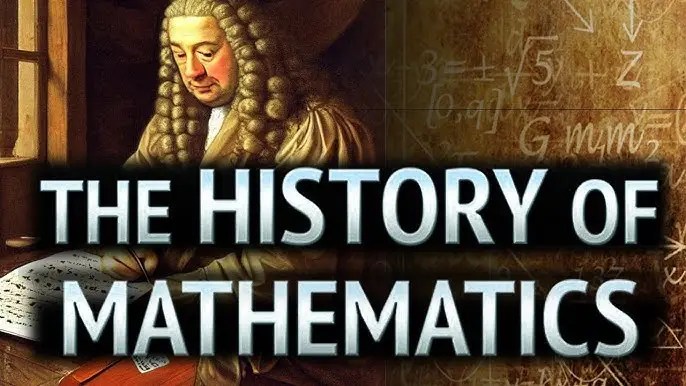
Mathematics has evolved remarkably over the centuries, marked by key milestones shaping mathematical practices. From ancient algorithms that laid the groundwork for mathematical proof methods to contemporary innovations in computational mathematics, the journey is fascinating.
Mathematics has evolved remarkably over the centuries, marked by key milestones shaping mathematical practices. From ancient algorithms that laid the groundwork for mathematical proof methods to contemporary innovations in computational mathematics, the journey is fascinating. This article will explore significant developments and figures in the history of mathematics, highlighting how algorithmic thinking has transformed problem-solving approaches. As we examine the pivotal moments that have influenced mathematical practices, we will also delve into how these historical insights continue to spur advancements in today’s mathematical landscape. Join us as we unveil the timeline of mathematics, revealing the intricate connections between past algorithms and present-day innovations.
2) **Milestones Shaping Mathematical Practices: Background, Context, and Implications for Research Culture**
Milestones shaping mathematical practices begin with early counting and geometry for trade and land. These methods linked numbers to daily needs and civic order. Over time, they formed habits of proof, notation, and careful measurement.
Ancient Babylonian tables and Greek deductive reasoning introduced repeatable techniques and persuasive argument. Euclid’s axiomatic style made assumptions visible and results traceable. This clarity still guides how mathematicians justify claims.
The spread of Hindu–Arabic numerals transformed calculation and record keeping across Europe. Algebra from the Islamic Golden Age added symbolic power to solve general problems. Together, they shifted mathematics from specific cases to abstract structures.
The scientific revolution pushed mathematics into experiments, astronomy, and engineering. Calculus offered a language for change, motion, and growth. It also raised questions about rigour that later shaped formal analysis.
In the nineteenth and twentieth centuries, logic, set theory, and modern algebra reorganised the discipline. New foundations supported deeper abstraction and more reliable proofs. They also created shared standards for peer review and publication.
Computing then recast mathematical work as both theory and practice. Algorithms became objects of study and tools for discovery. Simulation and optimisation widened research culture beyond traditional proof alone.
Today, data science and machine learning borrow mathematical ideas while demanding new safeguards. Reproducibility, transparency, and responsible use now sit beside elegance and rigour. These pressures influence what problems are funded and how results are communicated.
Seen together, these turning points show how methods and institutions co-evolve. Each milestone changes who participates, what counts as evidence, and how knowledge circulates. Understanding this history helps researchers choose tools thoughtfully and question inherited norms.
3) **Ancient Algorithms Were Not ‘Primitive’—They Were Engineering in Disguise (With Practical Examples)**
Ancient algorithms are often mislabelled as crude, because they look unfamiliar today. Yet many were designed for building, trade, and public administration. In other words, they were engineering methods, written as procedures.
Babylonian scribes used place-value arithmetic to solve land and labour problems. Their tablet steps resemble modern “worked examples”, not guesswork. They also used iterative methods to approximate roots, for practical accuracy.
Egyptian surveyors applied rope geometry to restore boundaries after Nile floods. A knotted rope could produce right angles quickly on site. That is algorithmic thinking, shaped by real-world constraints.
Greek mathematicians formalised proof, but they also developed tools. Euclid’s algorithm for greatest common divisors supported ratios in geometry. It still underpins computing, cryptography, and error checking.
In India, algorithms for zero and positional notation transformed calculation speed. That innovation made large-scale accounting and astronomy manageable. It also enabled later algebraic techniques across cultures.
Chinese methods, like rod numerals and elimination, tackled systems of equations. They were suited to taxation, engineering works, and calendar design. The approach mirrors matrix operations used in modern software.
Ancient procedures were not “pre-maths”; they were optimised workflows for measurement, forecasting, and control.
Seeing these methods as technical solutions reframes the milestones shaping mathematical practices. They were built to be repeatable, teachable, and reliable under pressure. Modern innovation often starts the same way: with a need, and a method.
4) **Proof Was a Political Technology: From Euclid’s Axioms to What We Privilege Today**
Proof has never been only a neutral method. From its earliest uses, it helped decide who could speak with authority. In that sense, proof acted as a political technology as much as a mathematical one.
Euclid’s axioms and postulates offered a model of certainty. They suggested that shared starting points could settle disagreements without appeals to status. Yet those starting points were choices, shaped by culture, education, and access.
In classical settings, learning geometry signalled elite training. The ability to follow strict deduction became a mark of credibility. That social function travelled with mathematics across empires and institutions.
As mathematics expanded, proof also became a gatekeeping tool. Formal styles rewarded those trained in particular schools and languages. What counted as “rigour” could exclude practical or intuitive knowledge.
Modern systems still privilege certain proofs and certain audiences. Peer review, journals, and departments validate some methods over others. These choices influence funding, curricula, and whose problems are deemed important.
Computation added fresh pressure to old norms. Machine-checked proofs can be reliable, yet hard to interpret. Conversely, probabilistic evidence can persuade researchers, while troubling purists.
Seeing proof as a social practice clarifies the milestones shaping mathematical practices. It shows that standards of certainty are negotiated, not merely discovered. It also explains why debates about rigour often mirror wider power dynamics.
For a historical anchor, the manuscripts of Euclid’s Elements reveal how proofs were transmitted and revised. The British Library’s catalogue offers accessible records and context: https://www.bl.uk/collection-guides/ancient-greek-manuscripts
5) **Notation Changed What Could Be Thought: Zero, Symbolism, and the Compression of Ideas**
Proof is often presented as neutral and timeless, yet it has long operated as a political technology: a way of deciding whose knowledge counts, which methods are credible, and what kinds of certainty institutions will fund, teach, and trust. Euclid’s axioms did more than organise geometry; they modelled a particular civic ideal of reasoning where claims must be derived from agreed starting points through publicly checkable steps. In that sense, proof became a social contract. The “obviousness” of an axiom was never purely mathematical—it reflected what a community was willing to accept as self-evident, and who was authorised to declare it so.
That legacy threads through the milestones shaping mathematical practices. When medieval and early modern scholars translated, taught, and standardised Euclidean styles of argument, they also standardised a hierarchy of acceptable explanation. Later, as algebra and calculus matured, mathematicians argued over rigour not merely for technical reasons, but because rigour polices the boundary between expert and outsider. A proof written for peers in a journal is a different political object from a proof written for students, engineers, or policymakers; each is tuned to a different audience and therefore privileges different forms of evidence, notation, and omission.
Even today, what we privilege in proof reflects contemporary pressures. Formal verification and computer-assisted proofs promise trust at scale, but they also shift authority towards those who control software, standards, and computational resources. Meanwhile, explanatory proofs remain prized in teaching because they distribute understanding, not just correctness. Modern mathematics therefore inherits Euclid’s ambition—public reasoning—while continuously renegotiating who the “public” is and what counts as an acceptable demonstration of truth.
6) **Calculus Didn’t ‘Arrive’—It Was Forced Into Being by Scientific Demands and Disputes**
Calculus didn’t simply appear as a neat new branch of mathematics. It was forced into being by urgent scientific needs. Astronomers, engineers, and physicists required reliable tools for change and motion.
Kepler’s planetary laws demanded sharper methods for curves and areas. Galileo’s studies of falling bodies raised questions about speed at an instant. These problems exposed the limits of classical geometry.
Newton shaped calculus to explain forces, orbits, and acceleration with precision. Leibniz developed a powerful notation that made calculation more systematic. Their approaches differed, yet both targeted the same practical gaps.
The famous priority dispute was more than academic rivalry. It influenced what was published, credited, and taught across Europe. Institutions and national pride helped set the early direction of the subject.
Behind the scenes, the core ideas were controversial. Infinitesimals seemed useful but logically slippery for many scholars. Mathematicians demanded firm foundations, not just successful results.
Later work by Euler, Cauchy, and Weierstrass tightened the definitions of limits and continuity. This turned calculus into a disciplined framework rather than a clever shortcut. The shift marked one of the key milestones shaping mathematical practices.
Today, calculus underpins modelling in climate science, medicine, and finance. Its origin story remains a lesson in how pressure drives invention. When reality posed hard questions, mathematics answered by transforming itself.
7) **Statistics Rewrote Certainty: From Error, to Inference, to Decision-Making (Practical Examples)**
Statistics transformed mathematics from a discipline that sought absolute proof into one that could reason sensibly under uncertainty. As industries expanded and scientific measurement improved, mathematicians and practitioners realised that error was not merely a nuisance but a feature of real-world data. Early work on observational error in astronomy and surveying encouraged the idea that repeated measurements cluster around a “true” value, and that careful methods can separate signal from noise. This shift laid vital groundwork for the milestones shaping mathematical practices, because it reframed certainty as something that could be quantified rather than simply claimed.
The next leap was inference: using samples to learn about wider populations. In public health, for example, statistical thinking enabled researchers to compare outcomes across groups and judge whether observed differences were likely to be meaningful or just chance variation. Confidence intervals and hypothesis tests offered a common language for weighing evidence, allowing a measured conclusion even when perfect knowledge was impossible. In manufacturing, statistical process control turned streams of measurements into actionable insight, helping factories detect when variation signalled a genuine problem rather than routine fluctuation.
Modern statistics went further by linking inference to decision-making. Consider a hospital deciding whether to adopt a new diagnostic test: the question is not only whether the test performs well on average, but how false positives and false negatives affect patients, budgets, and clinical workload. Statistical decision theory, Bayesian updating, and predictive modelling provide tools to combine prior knowledge with new data, estimate risk, and choose policies that balance harms and benefits. In finance, similar approaches power credit scoring and fraud detection, where decisions must be made quickly and imperfectly, yet responsibly. In each case, statistics does not eliminate uncertainty; it makes uncertainty measurable, discussable, and usable—turning doubt into disciplined judgement.
8) **Computation Became a New Epistemology: Algorithms, Complexity, and Trust (Practical Examples)**
Computation changed how mathematicians justified results. Proof was no longer the only gold standard. Algorithms, simulations, and verified code became accepted knowledge sources. This shift is among the key milestones shaping mathematical practices.
A modern example is the GPS in your phone. It relies on numerical optimisation and error modelling. Small rounding choices can shift a location by metres. Engineers therefore test algorithms against known benchmarks and edge cases.
Another practical case is machine learning for medical imaging. Models use linear algebra, probability, and optimisation at scale. Clinicians need calibrated confidence, not just predictions. That requires statistical validation and transparent performance metrics.
Complexity theory reshaped trust in what can be computed. Some tasks are solvable, but too slow in practice. This matters for encryption used in banking and messaging. Security depends on problems being computationally hard, not logically impossible.
Computer-assisted proof also became mainstream. The Four Colour Theorem relied on extensive case checking by computer. This raised questions about verifiability and human understanding. As Donald Knuth noted, “An algorithm must be seen to be believed.” Read it in context in his essay on computer programming as an art.
Today, trust increasingly means reproducibility. Researchers share code, data, and deterministic environments. Formal methods and proof assistants reduce hidden assumptions. Together, they mark computation as a new epistemology, not just a tool.
9) **Modern Innovations Are Reshaping Mathematical Practices: Formal Verification, AI, and Reproducibility**
Modern mathematics is changing quickly, driven by new tools and higher expectations of rigour. These shifts are among the key milestones shaping mathematical practices in the digital age. They influence how results are proved, shared, and trusted across disciplines.
Formal verification is making proofs more reliable by using proof assistants to check each logical step. Systems like Lean and Coq reduce hidden gaps and ambiguous arguments. This approach is also reshaping education, as students learn to write machine-checkable reasoning.
Artificial intelligence is accelerating discovery by suggesting conjectures, spotting patterns, and guiding searches. Researchers use machine learning to explore large spaces that resist manual intuition. Yet human judgement remains vital for meaning, explanation, and careful interpretation.
Reproducibility has become a central concern as computation plays a bigger role in research. Results now often depend on code, data, and parameter choices as much as algebra. Sharing repositories and computational notebooks helps others repeat and test claims.
These innovations also change collaboration, making mathematical work more open and networked. Preprints, open-source libraries, and community proof projects spread techniques rapidly. At the same time, they demand clearer documentation and more explicit assumptions.
Tensions remain, including worries about overreliance on tools and opaque models. Verification can be time-consuming, and AI can mislead without transparency. Still, the overall direction is towards stronger evidence and wider participation.
In practice, the future will blend traditional proof with computational support and audited workflows. The most enduring advances will be those that improve trust without limiting creativity. Together, formal verification, AI, and reproducibility mark a decisive new chapter in mathematical practice.
Conclusion
In summarising the milestones shaping mathematical practices, we see a clear evolution influenced by historical figures and their groundbreaking work. The transition from ancient algorithms to modern computational methods illustrates the importance of innovation in the field of mathematics. As we appreciate the rich history of mathematics, we recognise the vital role of algorithmic thinking and proof methods in shaping contemporary practices. These insights not only celebrate the past but also encourage ongoing developments within the discipline. The journey of mathematics continues, and as researchers, we must remain engaged with both its history and its future. Continue Reading.
Ready to make maths more enjoyable, accessible, and fun? Join a friendly community where you can explore puzzles, ask questions, track your progress, and learn at your own pace.
Your personal dashboard with points & achievements
A supportive space built for every level of learner
New features and updates as the Hub grows
Manage Consent
To provide the best experiences, we use technologies like cookies to store and/or access device information. Consenting to these technologies will allow us to process data such as browsing behavior or unique IDs on this site. Not consenting or withdrawing consent, may adversely affect certain features and functions.
Functional
Always active
The technical storage or access is strictly necessary for the legitimate purpose of enabling the use of a specific service explicitly requested by the subscriber or user, or for the sole purpose of carrying out the transmission of a communication over an electronic communications network.
Preferences
The technical storage or access is necessary for the legitimate purpose of storing preferences that are not requested by the subscriber or user.
Statistics
The technical storage or access that is used exclusively for statistical purposes.The technical storage or access that is used exclusively for anonymous statistical purposes. Without a subpoena, voluntary compliance on the part of your Internet Service Provider, or additional records from a third party, information stored or retrieved for this purpose alone cannot usually be used to identify you.
Marketing
The technical storage or access is required to create user profiles to send advertising, or to track the user on a website or across several websites for similar marketing purposes.