Welcome to Maths For Fun – where mathematical curiosity meets pure enjoyment for learners of all ages! Founded by a team of lifelong maths enthusiasts, we believe that numbers aren’t just for tests – they’re for exploration, discovery, and delight. Whether you’re eight or eighty, a beginner or a seasoned problem solver, you’ll find a growing collection of logic based games and puzzles that cover every corner of mathematics.
Welcome to Maths For Fun – where mathematical curiosity meets pure enjoyment for learners of all ages! Founded by a team of lifelong maths enthusiasts, we believe that numbers aren’t just for tests – they’re for exploration, discovery, and delight. Whether you’re eight or eighty, a beginner or a seasoned problem solver, you’ll find a growing collection of logic based games and puzzles that cover every corner of mathematics.
Using Maths to Enhance Marathon Training: From Pace Calculations to Personal Bests
Using maths to enhance marathon training can significantly improve your performance. From pace calculations to managing training loads, understanding these numbers is crucial for marathon runners.
Using maths to enhance marathon training can significantly improve your performance. From pace calculations to managing training loads, understanding these numbers is crucial for marathon runners. Implementing strategies such as the negative split can elevate your race time predictions. By calculating your ideal pace, you ensure that your training remains effective and focused on achieving personal bests. Mathematical concepts provide insights into how to make the most of your training sessions, balance workloads, and monitor fatigue levels. This article will explore how applying these mathematical principles can help you run smarter, not harder, paving the way for better results in your marathon journeys.
2) The Pace-Planning Problem (Maths for Marathon Training): Challenge → Method → Result in Minutes per Mile
Every marathon plan starts with a simple question: what pace can you truly hold? Many runners guess, then fade after mile 18. The pace-planning problem is turning a goal time into steady effort.
The challenge is that “comfortable” changes with terrain, weather, and adrenaline. Aiming too fast early creates a debt you repay with heavy legs. Aiming too slow can leave minutes on the course.
The method uses maths for marathon training to translate ambition into minutes per mile. First, convert your target finish time into total minutes. Then divide by 26.2 to get your average pace.
For example, a 4:00 marathon equals 240 minutes. Dividing 240 by 26.2 gives about 9.16 minutes per mile. That is roughly 9 minutes 10 seconds per mile.
Now apply a reality check using training data. If your long runs suggest a slower sustainable pace, adjust the target time. Small changes matter because they compound over 26.2 miles.
Next, plan for even or slight negative splits. You might aim a few seconds slower early. Then you return to average pace after settling in.
The result is a pace you can execute, not just admire. You arrive at mile 20 with options, not regrets. That is how clear calculations support personal bests.
3) Split-by-Split Targets Using Maths for Marathon Training: 5K/10K/Half Checkpoints and Error Margins
Split targets keep pacing honest when adrenaline is high. With maths for marathon training, you can set 5K, 10K, and half-marathon checkpoints. These checkpoints help you spot drift early and correct it calmly.
Start with your goal finish time, then divide by 42.195 km for kilometre pace. Convert that to a 5K and 10K split by multiplying. Keep calculations in minutes and seconds to avoid rounding errors.
Build in an “error margin” for hills, heat, and crowds. A practical starting point is ±1% on pace for the first half. Tighten it to ±0.5% after 30 km if you still feel strong.
Small split errors compound: 5 seconds per kilometre becomes over 3 minutes by the finish.
Use checkpoints as decision points, not judgements. If you are 20–40 seconds behind at 10K, avoid panicked surges. Instead, nudge pace back over the next 5–10 km.
Aim for negative splits when possible, but keep it realistic. Many runners plan a slightly slower first 5K. That protects your legs for the final 12 km.
Finally, practise this in long runs with race-day nutrition. Test your split plan on similar terrain and weather. When race day comes, you will follow numbers you already trust.
4) Training Load Numbers: Weekly Mileage, Intensity Ratios and Injury-Risk Thresholds
Training load is the maths behind how hard your body is working each week. For maths for marathon training, it turns vague effort into measurable progress. Weekly mileage is the simplest metric, but it becomes powerful when tracked consistently.
Your body tends to handle gradual increases better than sudden jumps. A common check is comparing this week’s mileage with your recent average. If the gap is large, fatigue rises and form often slips.
Intensity ratios add another layer, because ten miles easy is not ten miles hard. Many runners balance easy running with workouts by watching time at higher effort. When intensity climbs, total volume often needs to fall.
A useful idea is the acute-to-chronic workload ratio, which compares short-term load to longer-term load. When the acute load spikes above your baseline, injury risk can increase. Evidence-informed guidance is summarised by World Athletics, which discusses training load monitoring and risk: https://worldathletics.org/health-science/health/monitoring-training-load
Numbers also help you spot hidden stress from life outside training. Poor sleep, travel, or heavy work can raise strain at the same mileage. If perceived effort is rising, your “effective load” may be higher than your log suggests.
Use training load trends to protect consistency, not to chase bigger totals. The goal is steady adaptation that supports long runs and quality sessions. When the maths stays sensible, personal bests become more predictable.
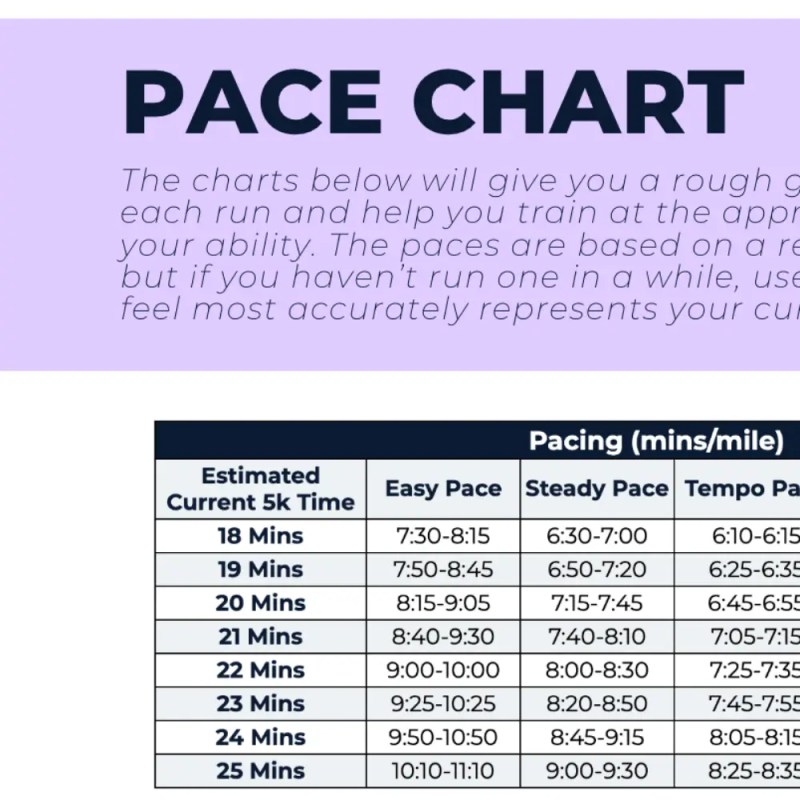
5) Practical Example: Converting a Goal Time into Session Paces (Easy, Tempo, Intervals)
Training load is where maths for marathon training becomes a practical safeguard as well as a performance tool. At its simplest, load is your weekly mileage, but the numbers become far more useful when you track how that mileage is distributed across easy, steady and hard running, and how quickly it changes from one week to the next.
A helpful way to quantify intensity is to calculate an intensity ratio: the percentage of your weekly distance (or time) spent at moderate-to-hard effort compared with easy aerobic running. Many marathoners thrive when the majority of training remains genuinely easy, with a smaller, consistent portion reserved for workouts and long-run segments. If your “hard” share creeps up while fatigue rises, your risk often does too.
The other key calculation is the acute-to-chronic workload ratio (ACWR), which compares your current week (acute load) to your recent rolling average (chronic load). It is not a crystal ball, but it does highlight spikes that commonly precede niggles. Use it alongside how you feel, sleep quality and soreness trends.
Metric
How to calculate
What the numbers suggest
Weekly mileage
Total miles run in 7 days
Sets overall load; consistency matters more than occasional big weeks.
Intensity ratio
(Miles at moderate+ effort ÷ total miles) × 100
Higher ratios increase stress; keep hard running deliberate rather than accidental.
Acute load
This week’s mileage (or total minutes)
Captures short-term stress and the impact of recent sessions.
Chronic load
Average mileage over the last 4 weeks
This represents what you are currently conditioned to handle. If it is low, even a modest spike can feel brutal and may raise injury risk.
ACWR
Acute load ÷ chronic load
Roughly 0.8–1.3 is often manageable; persistent jumps above that warrant caution.
Week-on-week change
((This week − last week) ÷ last week) × 100
Large increases can outpace adaptation, especially when paired with more intensity.
When you keep weekly mileage stable, control intensity ratios and avoid sudden load spikes, you give your body the steady stimulus it needs to build towards a personal best while reducing the odds of an avoidable setback.
6) Race Time Prediction Models: From 10K/Half Times to Marathon Forecasts and Confidence Ranges
Race time prediction models help you convert shorter race results into marathon forecasts. They turn past performances into sensible targets and pacing plans. This is a key use of maths for marathon training.
A common approach is the Riegel formula. It scales your time by distance using an exponent, often 1.06. For example, a 10K time can estimate a half marathon or full marathon.
Half marathon results usually predict marathon outcomes more reliably than 10K times. They reflect endurance, fuelling habits, and sustained pacing under fatigue. A strong half time still needs adjustment for heat and terrain.
Models can also provide confidence ranges, not just a single finish time. Think in bands, such as “3:35–3:45 likely” rather than “3:40 exactly”. Your range depends on training volume, long-run consistency, and recent taper quality.
To build your own range, compare several predictors and take a conservative middle. Use your best recent race, plus a recent long run at goal effort. If the estimates disagree, trust the slower one.
Finally, treat predictions as living numbers. Update them after tune-up races or key workouts. A smarter forecast keeps your pacing calm and your ambitions realistic.
7) Fuel and Hydration Maths: Grams of Carbs per Hour, Fluid Rates and Sodium Estimates
Fuel and hydration can feel like guesswork on long runs, but a little arithmetic turns it into a repeatable plan. When applying maths for marathon training, start with carbohydrate intake. Many runners perform well in the region of 60–90 g of carbs per hour, depending on gut tolerance and intensity. Converting that target into what you actually consume is where the numbers help: if your gel contains 25 g of carbohydrate, hitting 75 g per hour means taking three gels across the hour, or spacing them roughly every 20 minutes. If you prefer drink mix, check the label for grams per serving and calculate how many servings you’ll need per hour based on how quickly you can comfortably drink.
Next, estimate your fluid rate by measuring what you lose in training. Weigh yourself before and after a steady run, account for any fluid consumed, and convert the difference into litres; each kilogram lost is roughly one litre of sweat. Divide by run duration to get litres per hour, then aim to replace a sensible portion of that in the race, adjusting for conditions. Hot, humid days push the rate up; cool conditions often reduce it.
Sodium estimates follow similar logic. Sweat sodium varies widely, but a practical starting point is 300–800 mg per litre of fluid, scaling with your sweat rate and how salty your kit looks after long efforts. Once you know your hourly fluid intake, multiplying it by your sodium target gives an hourly sodium range to build into drinks, gels, or salt capsules. Test these calculations in training so race day becomes execution, not experimentation.
8) Course and Conditions Adjustments: Elevation Gain, Wind, Heat and Time-Cost Calculations
Course profiles and race-day conditions can shift your finish time by minutes. Using maths for marathon training helps you adjust expectations and pacing plans early.
Start with elevation gain. A simple approach is to “budget” time for hills. Add roughly 6–12 seconds per kilometre for every 10 metres climbed. Then subtract a smaller amount on descents, as braking still costs energy.
Wind needs its own adjustment. Headwinds increase effort, especially on exposed sections. Tailwinds rarely repay the same time. The key is to protect effort, not chase pace, when gusts hit.
Heat is often the biggest hidden cost. As the American College of Sports Medicine notes, “heat stress and dehydration can compromise endurance performance” (ACSM: Exercise and Fluid Replacement). Build a time penalty into your target when temperatures rise. Add 1–3% to expected time for warm conditions, then reassess at halfway.
Create a simple “time-cost” table for race day. List each risk: metres climbed, exposed windy kilometres, and forecast temperature. Assign each a minutes penalty and total them. This gives a realistic predicted finish time and safer pacing bands.
Finally, rehearse these adjustments in training. Compare a flat long run with a hilly one at similar effort. Track the time difference and refine your personal conversion factors. Over a marathon block, your estimates become specific and trustworthy.
Conclusion
In summary, leveraging maths for marathon training offers runners the tools to enhance their performance. By mastering pace calculation, employing a negative split strategy, and utilising effective training load management, you can achieve more accurate race time predictions. Understanding and applying these mathematical concepts is essential for reaching personal bests. The journey to marathon success is about using every advantage available, and maths is a powerful ally in that quest. If you’re ready to enhance your training today, try incorporating these strategies into your routine. Don’t forget to enter our exciting giveaway to kickstart your journey!
Ready to make maths more enjoyable, accessible, and fun? Join a friendly community where you can explore puzzles, ask questions, track your progress, and learn at your own pace.
Your personal dashboard with points & achievements
A supportive space built for every level of learner
New features and updates as the Hub grows
Manage Consent
To provide the best experiences, we use technologies like cookies to store and/or access device information. Consenting to these technologies will allow us to process data such as browsing behavior or unique IDs on this site. Not consenting or withdrawing consent, may adversely affect certain features and functions.
Functional
Always active
The technical storage or access is strictly necessary for the legitimate purpose of enabling the use of a specific service explicitly requested by the subscriber or user, or for the sole purpose of carrying out the transmission of a communication over an electronic communications network.
Preferences
The technical storage or access is necessary for the legitimate purpose of storing preferences that are not requested by the subscriber or user.
Statistics
The technical storage or access that is used exclusively for statistical purposes.The technical storage or access that is used exclusively for anonymous statistical purposes. Without a subpoena, voluntary compliance on the part of your Internet Service Provider, or additional records from a third party, information stored or retrieved for this purpose alone cannot usually be used to identify you.
Marketing
The technical storage or access is required to create user profiles to send advertising, or to track the user on a website or across several websites for similar marketing purposes.