Welcome to Maths For Fun – where mathematical curiosity meets pure enjoyment for learners of all ages! Founded by a team of lifelong maths enthusiasts, we believe that numbers aren’t just for tests – they’re for exploration, discovery, and delight. Whether you’re eight or eighty, a beginner or a seasoned problem solver, you’ll find a growing collection of logic based games and puzzles that cover every corner of mathematics.
Welcome to Maths For Fun – where mathematical curiosity meets pure enjoyment for learners of all ages! Founded by a team of lifelong maths enthusiasts, we believe that numbers aren’t just for tests – they’re for exploration, discovery, and delight. Whether you’re eight or eighty, a beginner or a seasoned problem solver, you’ll find a growing collection of logic based games and puzzles that cover every corner of mathematics.
Decimals Demystified: Addressing Frequent Errors and Misconceptions
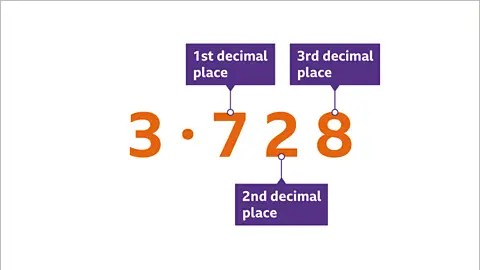
Decimals Demystified: Addressing Frequent Errors and Misconceptions will explore common decimal mistakes explained. Many individuals often struggle with the nuances of decimal place value, leading to confusion in rounding decimals correctly and ordering decimals.
Decimals Demystified: Addressing Frequent Errors and Misconceptions will explore common decimal mistakes explained. Many individuals often struggle with the nuances of decimal place value, leading to confusion in rounding decimals correctly and ordering decimals. A solid understanding of these concepts is crucial for both academic success and everyday applications. Additionally, converting fractions to decimals is an essential skill that many find bewildering. By addressing the frequent errors and misconceptions surrounding decimals, we aim to provide clarity and confidence in this foundational mathematical area. Join us as we delve into the intricacies of decimals and how to master them with ease.
Avoid ‘Longer Means Larger’: Common Decimal Mistakes Explained (Myth vs Fact)
Many learners assume a longer decimal is automatically larger. This seems sensible at first glance, but it is wrong. Place value, not length, determines a decimal’s size.
Myth: more digits after the point means a bigger number. Fact: digits further right represent smaller parts. Each move right divides the place value by ten.
Take 0.9 and 0.10 as a quick test. Some think 0.10 is larger because it looks longer. In fact, 0.9 equals 0.90, which is greater than 0.10.
Another example is 2.5 versus 2.49. The extra digit in 2.49 can mislead the eye. Yet 2.50 is larger, because five tenths exceeds four tenths.
Zeros after a decimal often cause confusion as well. People may believe 3.40 is bigger than 3.4. They are equal, since trailing zeros do not change value.
This misconception also appears when comparing money. £1.5 is the same as £1.50, not £1.05. The decimal point fixes the pounds-and-pence relationship.
To avoid these errors, align decimals by place value. Compare tenths with tenths, hundredths with hundredths, and so on. This simple habit keeps common decimal mistakes explained in a reliable, visual way.
Unlock your mathematical potential by learning to think like a mathematician at this page and discover more about our services on this account page!
Follow a Simple Checklist for Aligning Decimal Points (Worked Example)
Aligning decimal points is the quickest way to avoid messy arithmetic. It also prevents the common decimal mistakes explained in many classrooms.
Use this checklist before you add or subtract decimals. It is simple, repeatable, and easy to teach.
1) Write numbers in a column, not a row. Keep each digit in its own place.
2) Find the decimal point in every number. Mark it clearly with a dot or a small line.
3) Line up the decimal points vertically. This locks the place values in place.
4) Add trailing zeros if helpful. For example, write 3.5 as 3.50.
5) Add or subtract as usual. Start from the rightmost column.
6) Put the decimal point straight down. It should sit under the other decimal points.
7) Check the size of your answer. It should feel sensible.
When the decimal points line up, the place values line up too. Most errors come from mixing tenths with hundredths.
Worked example: calculate 4.7 + 0.056 + 12.34. First, rewrite 4.7 as 4.700. Then stack them so the points match.
12.340
4.700
0.056
———
17.096
Now add column by column. Keep the decimal point in the same vertical line.
Finally, do a reasonableness check. 12.34 + 4.7 is about 17.04. Adding 0.056 should give about 17.096, which fits.
Avoid Rounding Traps: When ‘0.5 Rounds Up’ Misleads (Myth vs Fact)
Rounding looks simple, yet it causes some of the most stubborn decimal errors. Many learners hear “0.5 rounds up” and apply it everywhere. That shortcut creates confusion when place value and purpose are ignored.
Myth: any number ending in 5 always rounds up in the same way. Fact: it depends on which digit you are rounding to. The 5 only matters at the first discarded place, not earlier digits.
If you round 2.45 to one decimal place, the hundredths digit is 5. You look at that 5 and increase the tenths digit, giving 2.5. But if you round 2.45 to the nearest whole number, you compare to 2.0 and 3.0, giving 2.
Another common trap is rounding twice. Rounding 3.146 to two decimals gives 3.15, then to one decimal gives 3.2. Yet rounding straight to one decimal gives 3.1, which is different.
Myth: rounding always makes results more accurate. Fact: rounding is a trade-off between simplicity and precision. In money, science, and data reporting, the rounding rule must match the context.
There is also a subtlety in “halfway” cases. Some systems use “round half to even” to reduce bias over many values. This is widely used in statistics and computing, and it changes some answers.
To avoid these slips, state the rounding target first and stick to it. Check the first discarded digit and never round twice unless required. These common decimal mistakes explained clearly can prevent big errors in real calculations.
For an accessible reference on rounding conventions, see NIST’s guide: https://www.nist.gov/pml/special-publication-811/nist-guide-si-appendix-b##B7
Use Reliable Methods for Ordering Decimals on a Number Line (Quick Practice)
Rounding seems straightforward until the familiar phrase “0.5 rounds up” is applied without thinking. This shortcut is at the heart of many common decimal mistakes explained in classrooms and workplaces alike, because it blurs the difference between a useful rule of thumb and a precise method. In everyday rounding to the nearest whole number, 3.5 becomes 4 and 8.5 becomes 9, so the myth feels safe. The trap appears when people assume every “5” must always push the digit up, regardless of context, scale, or agreed convention.
To see why, it helps to separate rounding to a stated decimal place from rounding during calculations. If you round 2.45 to one decimal place, you look at the second decimal place: 2.45 becomes 2.5 because the hundredths digit is 5. But if you round 2.44 to one decimal place, it becomes 2.4. The “0.5” idea isn’t wrong; it’s just incomplete, because it ignores which digit is actually being rounded and why.
There’s also a less-talked-about “tie” problem: values exactly halfway between two options (such as 2.5 between 2 and 3). Many people assume “always round halves up”, yet some settings use “round half to even” to reduce bias across large datasets. Under that approach, 2.5 rounds to 2 (even), while 3.5 rounds to 4 (even). Neither method is universally “correct”; what matters is consistency and stating the rule.
The safest habit is to identify the rounding place, check the next digit, and know which tie-breaking convention your context uses, especially in finance, statistics, and programming.
Avoid Adding and Subtracting Decimals Like Whole Numbers (Myth vs Fact)
Myth: you can add or subtract decimals just like whole numbers. Fact: place value matters, and alignment is everything. This is one of the most common decimal mistakes explained in classrooms.
When you treat decimals as whole numbers, you often ignore the decimal point. For example, people write 2.5 + 1.25 as 3.75 by guessing. Others write 2.5 + 1.25 = 2.130, which is incorrect.
The fix is simple: line up the decimal points before you start. Write 2.50 above 1.25, then add column by column. You get 3.75, and every digit stays in its correct place.
The same rule applies for subtraction. If you subtract 4.2 − 1.85, do not start from the left. Rewrite 4.2 as 4.20, then subtract 1.85 to get 2.35.
Another myth is that adding zeroes changes the value. Fact: trailing zeroes only show precision, not a new number. 3.4, 3.40, and 3.400 are equal in value.
Watch out for borrowing across the decimal point. This is where many learners slip during subtraction. Keep each column’s place value clear, and the method stays reliable.
A quick check helps: estimate before you calculate. 4.2 minus about 2 should be about 2.2. If your answer is far away, recheck alignment and regrouping.
Use a Consistent Approach to Multiply and Divide by Powers of 10 (Worked Example)
One of the most reliable ways to avoid slip-ups with decimals is to use a consistent approach whenever you multiply or divide by powers of 10. Many learners try to “move the decimal point” and end up shifting it the wrong way or by the wrong number of places. A steadier method is to think in terms of place value: multiplying by 10, 100, or 1,000 makes a number ten times, a hundred times, or a thousand times larger, so each digit shifts one, two, or three places to the left. Dividing by those same powers makes the number smaller, so each digit shifts to the right. Framing it as digits changing place value helps prevent the most common decimal mistakes explained in classrooms and revision sessions.
For a worked example, take 3.47. If you multiply by 100, you are making the number one hundred times larger, so the 3 moves from the ones column into the hundreds column, the 4 moves into the tens column, and the 7 moves into the ones column. The result is 347. If instead you divide 3.47 by 100, you are making it one hundred times smaller, so the digits shift two places to the right, giving 0.0347. Notice how the digits themselves do not change; only their positions (and therefore their values) do.
This is also where misconceptions often appear. People may write 3.47 ÷ 100 as 3.047 or 0.347 because they only shift one place, or they forget that dividing by 100 should produce a smaller number than the original. A quick reasonableness check keeps you consistent: dividing by 100 must make 3.47 less than 1, while multiplying by 100 must make it much larger than 3.47.
Avoid Confusing Fractions, Decimals and Percentages (Myth vs Fact + Conversion Examples)
Many learners mix up fractions, decimals and percentages. This drives several common decimal mistakes explained in classrooms. The key is remembering they show the same value in different forms.
Myth: Fractions are always “more exact” than decimals. Fact: Both can be exact or recurring. For example, 1/8 equals 0.125 exactly.
Conversion example (fraction to decimal): divide the numerator by the denominator. 3/4 becomes 3 ÷ 4 = 0.75. If the division repeats, the decimal will recur, like 1/3 = 0.333…
Conversion example (decimal to percentage): multiply by 100, then add the % sign. 0.42 becomes 42%. For quick checks, move the decimal point two places to the right.
Conversion example (percentage to fraction): write it over 100 and simplify. 25% becomes 25/100, which reduces to 1/4. For 12.5%, use 12.5/100 = 0.125, then convert to a fraction: 1/8.
A common trap is mixing methods mid-way. Choose one route and stick to it. Then cross-check by converting back to the original form.
Conclusion
In summary, understanding decimals can greatly enhance your mathematical skills and prevent common errors. We have explained the frequent misconceptions, including decimal place value and rounding decimals correctly. Additionally, we explored the importance of ordering decimals and converting fractions to decimals. By addressing these common decimal mistakes, you will feel more confident in using them in various contexts. Remember, practice is key, so apply what you’ve learned to improve your skills. Continue Reading for more insights and valuable tips!
Ready to make maths more enjoyable, accessible, and fun? Join a friendly community where you can explore puzzles, ask questions, track your progress, and learn at your own pace.
Your personal dashboard with points & achievements
A supportive space built for every level of learner
New features and updates as the Hub grows
Manage Consent
To provide the best experiences, we use technologies like cookies to store and/or access device information. Consenting to these technologies will allow us to process data such as browsing behavior or unique IDs on this site. Not consenting or withdrawing consent, may adversely affect certain features and functions.
Functional
Always active
The technical storage or access is strictly necessary for the legitimate purpose of enabling the use of a specific service explicitly requested by the subscriber or user, or for the sole purpose of carrying out the transmission of a communication over an electronic communications network.
Preferences
The technical storage or access is necessary for the legitimate purpose of storing preferences that are not requested by the subscriber or user.
Statistics
The technical storage or access that is used exclusively for statistical purposes.The technical storage or access that is used exclusively for anonymous statistical purposes. Without a subpoena, voluntary compliance on the part of your Internet Service Provider, or additional records from a third party, information stored or retrieved for this purpose alone cannot usually be used to identify you.
Marketing
The technical storage or access is required to create user profiles to send advertising, or to track the user on a website or across several websites for similar marketing purposes.